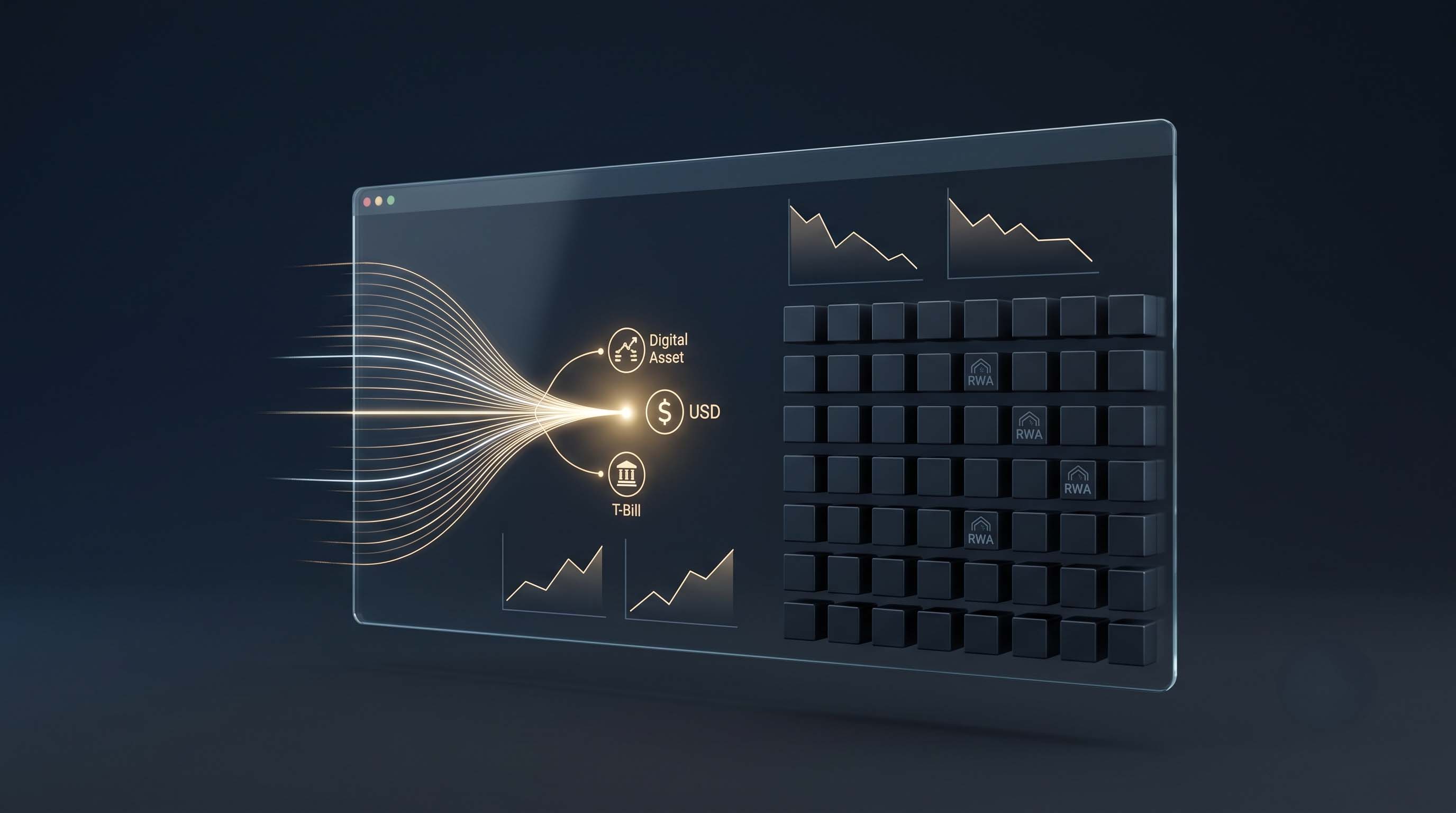
What Institutions Need to Know About the GENIUS Act to Accelerate Their Tokenization Strategy
On July 18, 2025, President Trump signed the Guiding and Establishing National Innovation for U.S. Stablecoins Act, the GENIUS Act, into law. It was the first standalone federal stablecoin statute in US history. More than a year later, the practical reality for institutions is messier than that signing ceremony suggested: the law's own July 18, 2026 statutory deadline for finalized implementing rules came and went without a completed package from the six federal agencies involved, while the January 18, 2027 effective date has not moved.
That gap between "the law exists" and "the rules are final" is the actual environment institutions are building tokenization strategy in right now. Here's what the Act requires, where implementation actually stands as of this writing, and where that leaves institutions trying to plan a tokenization roadmap around it.
What the GENIUS Act Actually Requires
The Act defines a payment stablecoin narrowly: a digital asset issued for payment or settlement purposes, redeemable at a fixed value (typically $1), backed 1:1 by permitted reserves, and explicitly barred from paying yield or interest. That last restriction matters more than it might first appear, and we'll come back to it.
Only "permitted issuers" may issue a payment stablecoin in the US. That means a subsidiary of an insured depository institution, a federally qualified nonbank issuer, or a state-qualified issuer capped at $10 billion in outstanding issuance before it must move to federal oversight. A new Stablecoin Certification Review Committee, chaired by the Treasury Secretary alongside the Federal Reserve and FDIC chairs, must unanimously approve any non-financial public company seeking to become an issuer.
Reserve requirements are strict: cash, insured bank deposits, short-dated Treasury bills, repos and reverse repos backed by Treasuries, and a short list of similarly conservative instruments. Reserves cannot be commingled with an issuer's own funds, and issuers above $10 billion must publish audited financial statements. All issuers, regardless of size, are subject to Bank Secrecy Act AML obligations and must annually certify their compliance programs.
Two provisions matter specifically for tokenization infrastructure. First, issuers must build in the technical capability to freeze or seize stablecoins under lawful court or regulatory order, this is a compliance feature, not an optional add-on. Second, in a bankruptcy proceeding, stablecoin holders get priority over every other class of creditor claim, a meaningful protection that didn't exist in any prior stablecoin arrangement.
Where Implementation Actually Stands (as of September 2026)
This is the part that matters most for anyone planning around this law today. The rulemaking timeline has slipped, and it has slipped across every agency with a piece of the mandate:
- The OCC issued its proposed rule in late February 2026, with the comment period closing in May.
- The FDIC approved its notice of proposed rulemaking on April 7, 2026, covering deposit insurance treatment for reserves held at insured banks and addressing tokenized deposits directly.
- Treasury published its own proposed rule on payment stablecoin issuance restrictions on August 18, 2026, with public comments open until October 19, 2026.
- FinCEN's supplemental AML rulemaking and OFAC guidance remain outstanding as well.
None of these had been finalized by the July 18, 2026 statutory deadline Congress set. The Act contains no automatic fallback or interim guidance mechanism for a missed deadline, agencies can be late, but the law doesn't pause while they catch up. Compounding this, the effective date is fixed at whichever comes first: January 18, 2027, or 120 days after final regulations are issued. With final rules still not published as of this writing, institutions are working against a deadline that isn't moving while the actual compliance requirements underneath it are still being drafted.
The stakes are sized accordingly. Total stablecoin market capitalization crossed $300 billion in early 2026 and stood at roughly $316 billion by June, up from about $308 billion at the end of 2025, with annual transaction volume reaching an estimated $33 trillion in 2025. Tether's USDT alone represents roughly $189 billion of that market as of Q1 2026, and it remains issued offshore with no Treasury comparability determination yet made, which is itself a live example of the kind of jurisdictional ambiguity institutions are navigating.
What This Means for a Tokenization Strategy
The instinct for a lot of institutions has been to wait for final rules before committing to infrastructure. That's a reasonable instinct and also, given the timeline above, potentially an expensive one. A rulemaking process is not going to conveniently finish before the effective date it's racing against. The more durable approach is to build compliance infrastructure now that's designed to absorb whatever the final rules turn out to require, rather than infrastructure hard-coded to today's proposed rule text.
This is where the stablecoin conversation and the broader tokenization conversation actually connect. The GENIUS Act's no-yield restriction on payment stablecoins is already pushing institutional demand toward tokenized money market funds and other short-duration instruments as the compliant, yield-bearing alternative, both as reserve assets for issuers and as onchain savings products for holders. At the same time, a federally defined stablecoin category gives institutions a clearer path to use stablecoins as the cash leg in atomic, delivery-versus-payment settlement of tokenized securities, something that's been slowed for years by exactly the kind of regulatory ambiguity this Act was written to resolve.
Put together: institutions that get their tokenized securities infrastructure right now are positioned to plug directly into whatever stablecoin settlement rails mature over the next year, without needing to rebuild that infrastructure once final rules land.
Where Zoniqx Fits
This is precisely the scenario Zoniqx's compliance architecture was built around. ERC-7518 (DyCIST), the token standard Zoniqx authored, enforces compliance rules at the moment of transfer rather than freezing them into a contract at issuance. That distinction matters directly here: when the OCC's rule, the FDIC's rule, and Treasury's rule all eventually finalize, potentially with different requirements than their current proposals, an issuer or institution using dynamically enforced compliance logic can update its rule set without redeploying its token contracts or migrating investor positions. An institution that hard-coded today's proposed requirements into a static compliance layer doesn't have that option.
Zoniqx's infrastructure, through z360 for issuance and lifecycle management and zConnect for distribution, is built for exactly this kind of regulatory environment: one where the rules are real, the deadline is fixed, and the specifics are still being written. That's also why partition-aware, multi-chain design matters here, institutions building tokenized reserve assets or settlement rails don't yet know which chains and which agency's final rule they'll ultimately need to interoperate with, and infrastructure that assumes a single fixed rule set or a single chain forecloses options an institution may need in twelve months.
What Institutions Should Actually Do Now
- Don't wait for final rules to start building, the effective date isn't waiting either, and rebuilding compliance infrastructure under time pressure next year is a worse position than building adaptable infrastructure now.
- Separate the compliance logic from the token contract. Whatever the OCC, FDIC, and Treasury eventually finalize, it should be a configuration change to the compliance layer, not a token migration.
- Treat the no-yield restriction as a signal, not a footnote. Institutional demand for tokenized MMFs and short-duration instruments as compliant, yield-bearing alternatives is a direct, foreseeable consequence of this Act, and it's arriving now, not after final rules land.
- Plan for multi-agency, multi-chain reality. A federally qualified issuer, a state-qualified issuer under $10 billion, and a foreign issuer with a Treasury comparability determination will all operate under meaningfully different rule sets. Infrastructure that can't flex across that spectrum will need to be rebuilt as issuers sort themselves into these categories.
The Bottom Line
The GENIUS Act didn't just create a stablecoin category, it created a live case study in what tokenization infrastructure needs to survive regulatory uncertainty that resolves slowly and unevenly. The institutions best positioned a year from now won't be the ones who waited for the OCC, FDIC, and Treasury to finish their rulemakings. They'll be the ones who built compliance infrastructure flexible enough not to care which agency finishes first, or what changes between the proposed rule and the final one.
To talk through what compliance-native tokenization infrastructure looks like for a specific stablecoin, reserve-asset, or settlement use case, schedule a call with the Zoniqx team.
References
- Congress.gov — S.1582, GENIUS Act of 2025, full bill text and CRS summary.
- Covington & Burling LLP — "The GENIUS Act Becomes Law: Key Provisions from the Federal Stablecoin Regulatory Framework."
- Sidley Austin LLP — "The GENIUS Act: A Framework for U.S. Stablecoin Issuance."
- Paul Hastings LLP — "The GENIUS Act: A Comprehensive Guide to US Stablecoin Regulation."
- OCC — Notice of Proposed Rulemaking, GENIUS Act Regulations, February 2026.
- FDIC — Notice of Proposed Rulemaking on GENIUS Act Requirements for FDIC-Supervised Issuers, April 7, 2026.
- Federal Register — Treasury proposed rule on payment stablecoin issuance, offer, and sale, August 18, 2026.
- Wolters Kluwer — "The GENIUS Act in 2026: A Strategic Inflection Point for U.S. Banks."
- DailyCoin — "How Stablecoin Regulation Drives Blockchain Innovation 2026," stablecoin market cap and transaction volume data.
- Brookings Institution — "Next Steps for GENIUS Payment Stablecoins."
About Zoniqx
Zoniqx, a Silicon Valley-based fintech leader, specializes in real-world asset tokenization using AI-driven multi-chain technology. Its platform ensures secure, compliant tokenization, supporting diverse asset classes and global liquidity.
To explore how Zoniqx can assist your organization in unlocking the potential of tokenized assets or to discuss potential partnerships and collaborations, please visit our contact page.
Disclaimer
This article is for informational purposes only and does not constitute legal, financial, or regulatory advice. Regulatory details reflect the status of rulemaking as of the article's publication date and are subject to change as agencies finalize their rules. Readers are encouraged to consult with legal or regulatory professionals before making decisions based on this legislation. Zoniqx operates in full compliance with applicable laws and supports regulatory clarity in the tokenization ecosystem.